

Most people experience the Legacy Trail as a quiet way to get outdoors. But this peaceful path once sounded very different.
Trains rolled through this corridor, whistles announcing their arrival as steel wheels clattered along the tracks. They carried visitors and freight, military cadets and prospective homebuyers, connecting this little stretch of the Gulf Coast with a much larger world. And as Venice celebrates its centennial, there's something fitting about looking back at those tracks. The railroad, after all, was here before the city was.
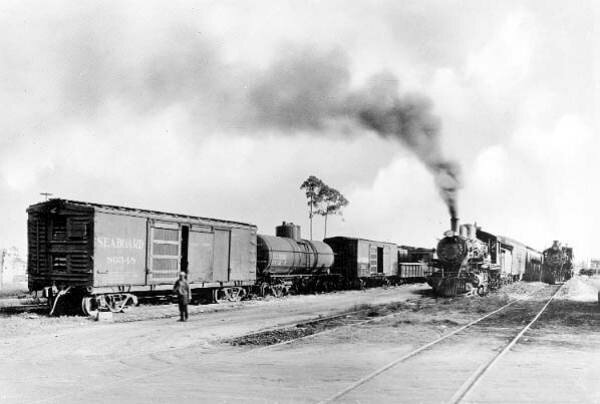
Railroads had already been changing Southwest Florida for decades by then. They opened distant markets to communities that had relied heavily on boats and some fairly questionable overland routes. In Manatee County, Fuller's Earth clay eventually left Ellenton in railroad cars, while logs from Florida timberlands arrived by rail at the Nocatee-Manatee Crate Company. An old locomotive was even put to work hauling logs to a Bradenton sawmill in the 1890s. According to Mary McMurria's Early Days of Industry in Manatee, railroads became tangled up with just about every industry that kept these early communities humming.
Venice joined that network in 1911. Seaboard Air Line extended its tracks 16.5 miles south from the Sarasota area, crossing Dona and Roberts bays before reaching Venice. The line belonged to a much larger web spreading through Southwest Florida, serving timber mills, turpentine stills, farms and towns that were beginning to grow into something more substantial. According to Kent Chetlain's Railroad Chronology of Southwest Florida, the Venice extension was completed by late November 1911, about 15 years before Venice incorporated as a city.
Then something extraordinary happened. The railroad men put down their steel track and ties and helped build the city itself.
In 1925, the Brotherhood of Locomotive Engineers acquired the Venice as an investment property. They worked with the city planner, John Nolen, who envisioned avenues, parks, commercial areas and walkable neighborhoods. Nolen's ideation became the foundation of the historic Venice we know today. They even shifted the railroad tracks, which originally ran through the heart of town, to fit more naturally into Nolen's master plan, according to documentation prepared for the National Register of Historic Places.
The Venice Train Depot opened in 1927 as part of that ambitious development. From its platform, the new city could meet the outside world. Prospective homebuyers stepped off trains to have a look at this planned community on the Gulf, while freight traveled between Venice and northern markets. The depot still standing at 303 East Venice Avenue was built as part of the Brotherhood's development and is now listed on both the local and National registers of historic places, according to the City of Venice.
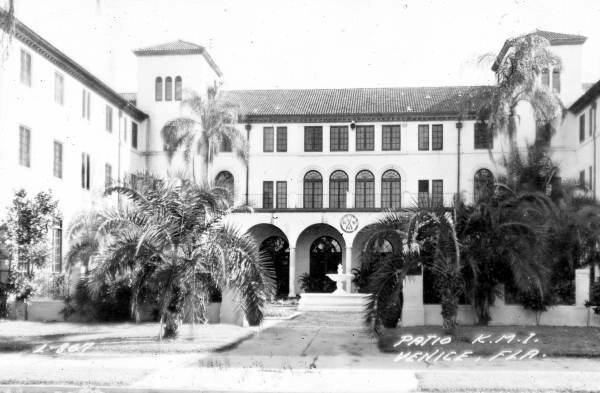
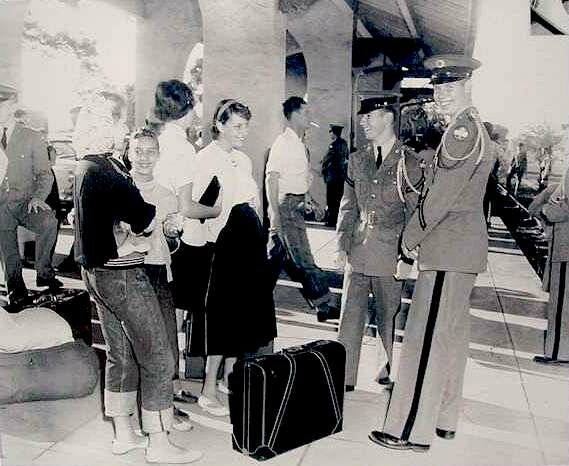
One January evening in 1933 a special train carrying the Kentucky Military Institute pulled into Venice at about 5 p.m. after a roughly 40-hour trip from Kentucky. The school's own history records that approximately 1,500 people came out to greet it. Residents volunteered their automobiles to show the newcomers around, and welcome signs appeared in Bradenton, Sarasota and Nokomis, even as far away as Tampa. That's quite a reception for a train full of schoolboys. The cadets weren't simply passing through, either. KMI was moving its winter operation to Venice, bringing students, faculty and staff south with it. According to KMI records, the migration became an annual Venice tradition.
What is now Centennial Park became KMI's parade ground. Cadets drilled and marched there during the months they spent in Venice, while the train carried them back and forth between their Kentucky and Florida campuses. Today it's one of the gathering places at the heart of Venice's 100th-birthday celebrations.
The faces on the depot platform kept changing right along with Venice. During World War II, military personnel connected with the Venice Army Air Base came through. Later came Ringling Bros. and Barnum & Bailey when the circus established its winter headquarters in Venice. Passenger service finally ended in 1971, although the railroad's working life here wasn't quite finished. City records note that the depot connected Venice with northern markets for more than 70 years.
Today, the trains are gone, but the route never really disappeared.
The depot is still there, and so is the corridor. Only now, instead of waiting for a train, people pass by on bicycles or on foot, heading up the Legacy Trail without giving much thought to why this long, straight path through town happens to be here.
Which is maybe the best part of this story.
A hundred years into Venice's history, we're still traveling the old railroad route. We're just doing it a whole lot more quietly.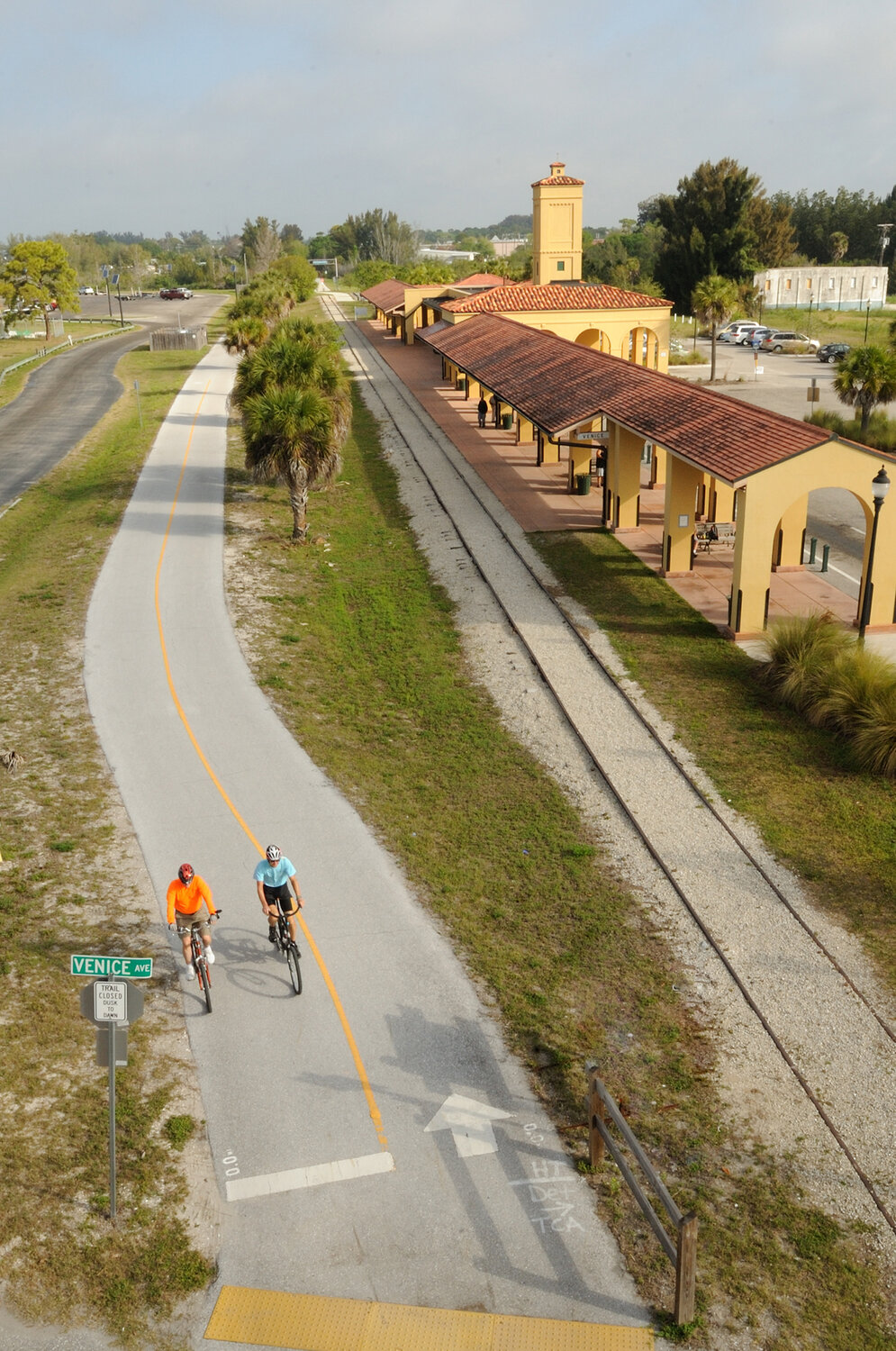


Comments
No comments on this item
Only paid subscribers can comment
Please log in to comment by clicking here.