

Today, Publix is one of Florida's most recognizable brands, beloved for its Pub Subs, fried chicken and friendly service. You can find a Publix in just about every corner of the Sunshine State. But nearly a century ago, another Florida chain with the very same name was serving up something completely different. And the man who founded Publix Super Markets may have been its biggest fan.
Before Publix shoppers went bonkers for BOGO, the name "Publix" appeared on the marquees of grand movie theaters across Florida. During the 1920s, Publix Theatres, an affiliate of Paramount Studios, operated approximately 19 theaters throughout the state, including the Tampa Theatre, the Florida Theatres in Jacksonville and St. Petersburg, and the Olympia Theatre in Miami, according to the Florida Memory Project.
These weren't ordinary movie houses. They were elaborate "movie palaces" designed to make a night at the cinema an unforgettable experience. Many featured ornate architecture, live organ music, luxurious décor and, perhaps most importantly in Florida's subtropical climate, air conditioning.
The Florida Theatre in St. Petersburg was the first air-conditioned building on Florida's Suncoast. Publix theaters also hosted community events ranging from vaudeville performances to ukulele contests and afternoon tea gatherings, making them cultural centers as much as entertainment venues, according to the Florida Memory Project.
As Publix Theatres expanded across Florida during the 1920s, a young man named George Jenkins was beginning his own journey in the grocery business. After growing up helping in his father's general store in Georgia, Jenkins arrived in Florida with just nine dollars in his pocket during the state's land boom. When his plans to work in real estate fell through, he took a job at a Piggly Wiggly grocery store, a decision that would shape the rest of his life, according to the Publix story.
Meanwhile, Publix Theatres had become one of the largest entertainment companies in the nation. By the end of the 1920s, the company operated approximately 1,200 theaters across the United States, according to the Florida Memory Project.
Then came the Great Depression.
In March 1933, TIME magazine reported that Paramount Publix Corporation entered bankruptcy with "$166,000,000 in assets and 1,500 theatres on its hands." Although many of the theaters continued operating under new ownership, the Publix name gradually disappeared from Florida's entertainment landscape.
But before the name vanished completely, it caught the attention of Jenkins, a young grocery manager, who "liked the sound of the name," according to an article he wrote called "The Publix Story."
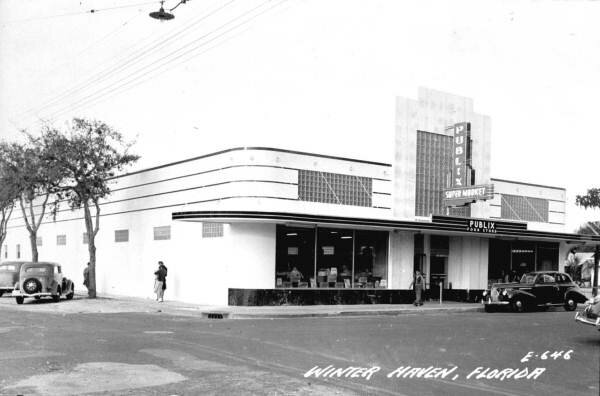
On Sept. 6, 1930, Jenkins opened his first Publix Food Store in Winter Haven, explaining that he "borrowed" it from a chain of theaters that were closing.
The decision proved to be one of the most enduring branding choices in Florida history. The smal neigborhood grocery became an overnight sensation. Five years later, Jenkins opened a second location on the other side of town.
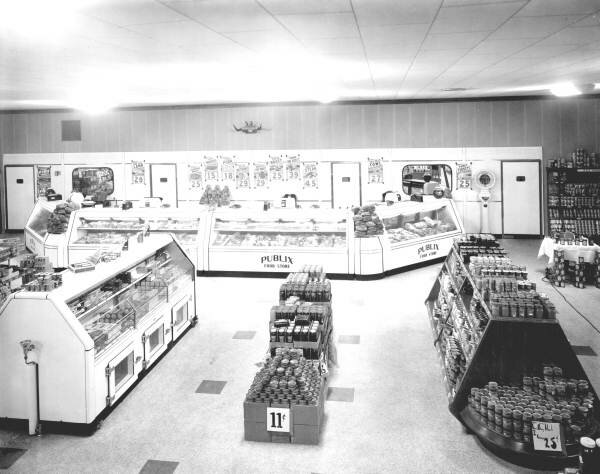
But like the grand movie palaces of the 1920s, Jenkins envisioned a new type of grocery that felt modern and memorable. In 1940, he unveiled what he called a supermarket in Winter Haven. The building was over the top, with Art Deco styling, automatic doors, fluorescent lighting, air conditioning and innovations rarely found in grocery stores of the era. It was described as a "state-of-the-art food palace of marble, glass and stucco," according to a News-Press article by Mark H. Bickel.
By the end of the 1940s, Publix had grown to 20 stores across Florida. Today, the company has grown into one of the largest employee-owned supermarket chains in the United States, while the original Publix Food Store building still stands in downtown Winter Haven, now home to a restaurant, according to Bickel.
Although most of the original Publix theaters have long since disappeared, a handful survive as treasured landmarks. Among them is the Tampa Theatre, whose dazzling Mediterranean-inspired interior still transports visitors to the golden age of movie palaces.
Every day, millions of Floridians walk beneath the familiar green Publix sign without realizing they're preserving a small piece of the state's history. The theater marquees may have gone dark, but thanks to George Jenkins, one of Florida's most recognizable names never disappeared.


2 comments on this item
Only paid subscribers can comment
Please log in to comment by clicking here.
Charles
— have not been back to Publix since they began to allow "open carry" in their stores, an invitation to an inevitable tragedy in a grocery store...
their recent attempt to win customers back with posting "suggestions" that folks not do just that, just fails to make sense, and provides no solution to the problem they created.
What purpose is served by allowing open carry in a grocery store? No thank you, I'd rather not be caught in that inevitable tragedy.
Sunday, June 28 Report this
sandy
I continued to shop at Publix. Personally, I NEVER saw anyone open carry. Maybe I'm just not as observant as I could be. But the policy never bothered me. There're probably people who had a concealed license in the store to this day and you never knew it.
Monday, June 29 Report this