
Before luxury condominiums lined the waterfront, visitors to Sarasota and Manatee counties checked into grand hotels with tropical gardens, sweeping verandas and bayfront views. This week in our "Lost but Not Forgotten" series, we revisit the elegant hotels that helped define Florida's Gulf Coast and welcomed generations of winter visitors, celebrities and dreamers.
Today, many of these hotels are gone, replaced by modern development or adapted for new uses. Yet for decades, they served as gateways to paradise for winter visitors, business travelers and tourists eager to experience Florida’s Gulf Coast.
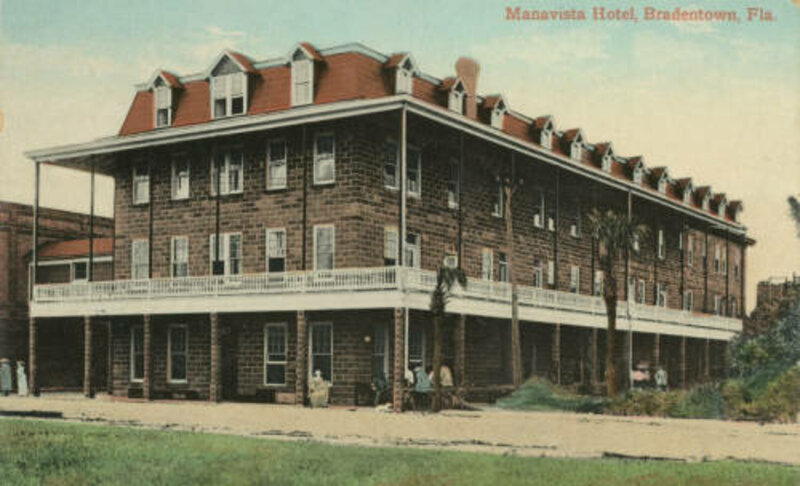
Long before the grand hotels of the 1920s, the Manavista Hotel welcomed visitors to the banks of the Manatee River.
Opened in 1887, the hotel quickly became one of the region's premier destinations, offering riverfront views and elegant accommodations for travelers arriving by steamship. The Manavista helped establish Bradenton as a winter resort destination and became a symbol of the area's growing tourism industry, according to local historical accounts.
Although the hotel was eventually lost to fire, its legacy lives on through photographs, postcards and memories of an era when visitors first discovered Florida's Gulf Coast by water rather than highway.
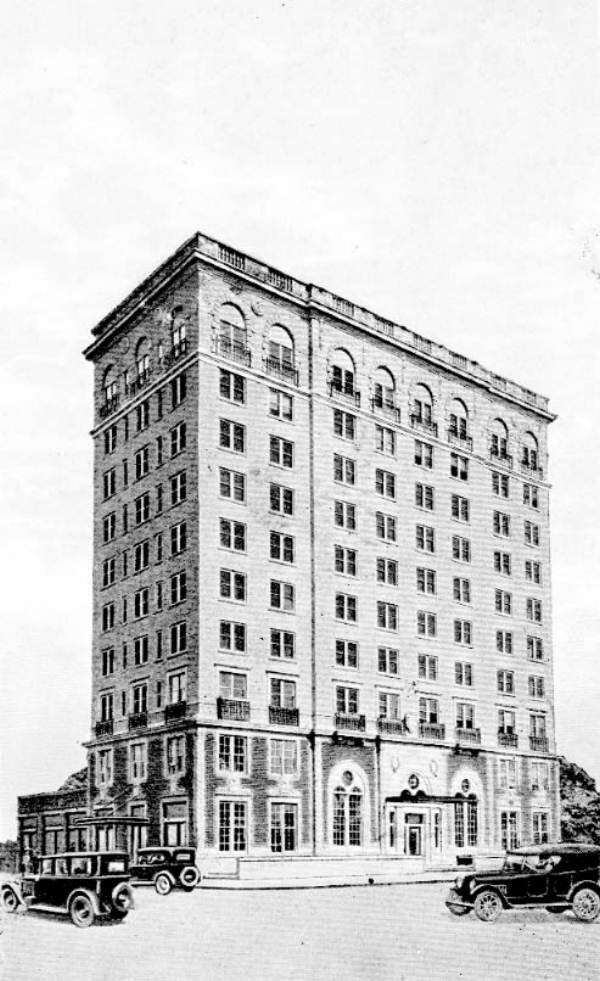
Few buildings better illustrate Sarasota's ability to reinvent itself than the Sarasota Terrace Hotel.
Built by Charles Ringling in 1925 on the site of the former Gillespie Golf Course, the hotel originally opened as the Ringling Terrace Hotel during the height of Florida's land boom. Over the decades, it survived the Great Depression, hurricanes and two world wars. The hotel was later purchased by Arthur Allyn and used to house the Chicago White Sox during spring training, according to the historical marker.
Unlike many of the grand hotels of its era, the Sarasota Terrace was not demolished. Sarasota County purchased the building in 1972 and transformed it into the Sarasota County Administration Center after extensive renovations. Today, it remains one of the most visible reminders of Sarasota's early tourism boom.
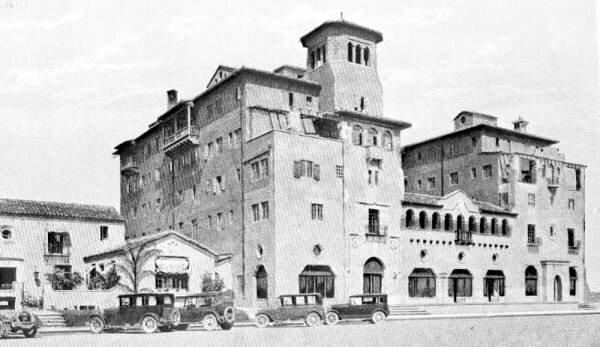
Just a few blocks away stood another grand landmark.
Originally opened as the El Vernona Hotel in 1926, the property was developed by Sarasota builder and developer Owen Burns during the height of the Florida land boom. The Mediterranean Revival hotel featured elegant architecture and luxurious accommodations designed to attract wealthy visitors to Sarasota, according to local historical accounts.
The hotel later became known as the John Ringling Hotel after its purchase by the circus magnate. For decades, it remained one of downtown Sarasota’s most prominent buildings and welcomed generations of visitors to the city.
Unlike the Sarasota Terrace, however, the John Ringling Hotel did not survive. The landmark was ultimately demolished as downtown Sarasota evolved, leaving photographs and memories as reminders of one of the city’s most celebrated hotels.
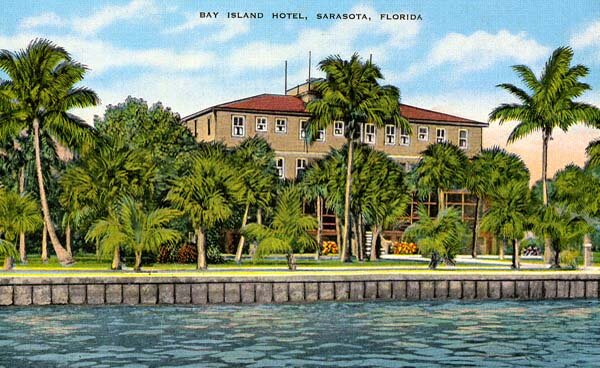
Long before Siesta Key became one of the nation’s most famous beaches, visitors seeking a Gulf Coast getaway could check into the Bay Island Hotel.
Opened in 1912 on what was then a remote barrier island, the hotel catered to visitors looking for fishing, boating and relaxation along Sarasota Bay. In its early years, many guests arrived by boat, giving the property an isolated, resort-like atmosphere that felt far removed from the mainland, according to the Sarasota Alliance for Historic Preservation.
The Bay Island Hotel represented a different chapter of Gulf Coast tourism. Rather than serving downtown visitors, it offered an escape into Florida’s natural beauty, complete with waterfront views and easy access to the bay.
Though the hotel is long gone, it remains an important reminder of Siesta Key’s earliest days as a tourist destination.
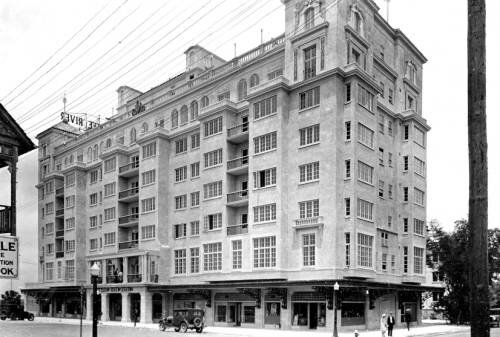
Across the county line, Bradenton had a grand hotel of its own.
The Manatee River Hotel opened in 1926 overlooking the Manatee River and quickly became one of Bradenton’s most prominent landmarks. Its Mediterranean Revival design reflected the architectural style that defined many Florida hotels during the 1920s boom years, according to the Bradenton Area Convention & Visitors Bureau.
The hotel welcomed winter visitors, business travelers and tourists arriving to experience Florida’s warm climate and waterfront scenery. Like many historic hotels, it faced changing travel patterns and economic challenges as the decades passed.
Unlike some of its contemporaries, however, the Manatee River Hotel survived through adaptation. Portions of the historic structure remain incorporated into today’s Hampton Inn & Suites in downtown Bradenton, allowing visitors to experience a piece of the original building nearly a century after it first opened.
The grand hotels of Sarasota and Manatee counties were more than places to spend the night. They served as social centers, business hubs and symbols of a region eager to welcome visitors from around the world.
As travel patterns changed, many of these hotels closed, were demolished or found new purposes. Yet their influence can still be seen throughout the Gulf Coast. They helped establish the region’s reputation as a destination for recreation, relaxation and winter tourism long before modern resorts and condominium towers reshaped the skyline.
Some survive in unexpected ways. Others exist only in photographs, postcards and newspaper clippings. But together they tell the story of a time when checking into a grand hotel was often the beginning of a Florida adventure.
The guests checked out long ago, but the stories remain.


Comments
No comments on this item
Only paid subscribers can comment
Please log in to comment by clicking here.