

Imagine a summer afternoon with temperatures in the 90s, high humidity and no air conditioning. For most of the area's history, that wasn't unusual. Long before central air became standard, residents relied on architecture, ingenuity and the natural environment to stay comfortable during Florida's hottest months.
Florida summers have always been hot.
Long before air conditioning was standard in every Florida household, local residents faced the same challenge we do every summer: how do you stay comfortable when it's 92 degrees with enough humidity to steam a pudding?
The answer wasn't technology. It was adaptation.
For generations, Floridians relied on clever architecture, daily routines and a little ingenuity to survive the long summer months.
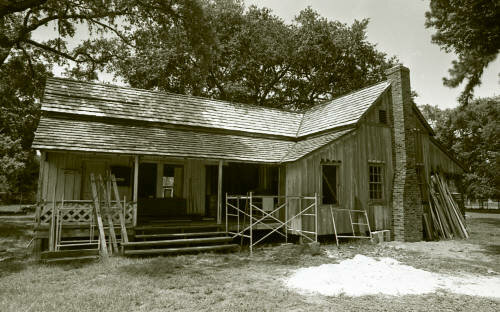
(Above: The old Stephens family house after being moved to the Manatee Village Historical Park in Bradenton at 604 15th St. E. in Bradenton. The style of the house is described as "Cracker Gothic" photo courtesy of the Manatee County Public Library System).
Houses Built for the Climate
Back then, homes were designed to work with Florida's weather rather than fight it.
Many early Florida homes featured wide porches, tall ceilings and large windows positioned to catch cross breezes. Some were raised several feet off the ground, allowing air to circulate beneath the structure. Deep roof overhangs provided shade while keeping the sun from directly heating exterior walls.
One particularly clever feature was the sleeping porch.
Usually located on a second story or enclosed with screens, sleeping porches allowed families to spend summer nights where breezes were strongest. Before air conditioning, the coolest room in the house wasn't necessarily indoors. Families often moved beds onto porches or opened every available window in hopes of catching even the slightest evening breeze.
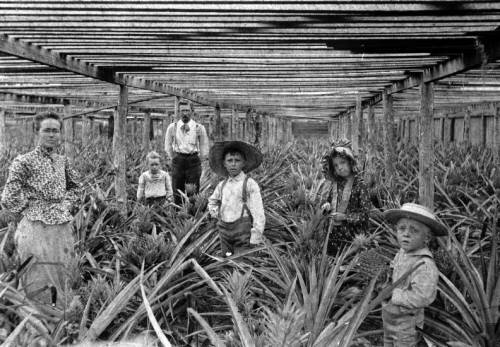
| Above: Family of Talbot Sharp Pollard in their pineapple pinery. Left to right: Vitula Ann Grigsby Pollard, Miriam "Mary" Vitula Pollard Scott, Mr. Willis (hired hand), Lloyd Talbot Pollard, Marjorie Lillian Pollard Owen, and William "Bill" Cranston Pollard. Photo courtesy of the Manatee County Public Library System. |
Following the Sun
Early Floridians also adjusted their schedules.
Farmers, fishermen and laborers often began work at first light, completed the most physically demanding tasks during the cooler morning hours and slowed down during the hottest part of the afternoon. Evening brought a return to outdoor chores, social visits and community gatherings.
When the temperature climbs into the 90s, a little patience can be more effective than determination.
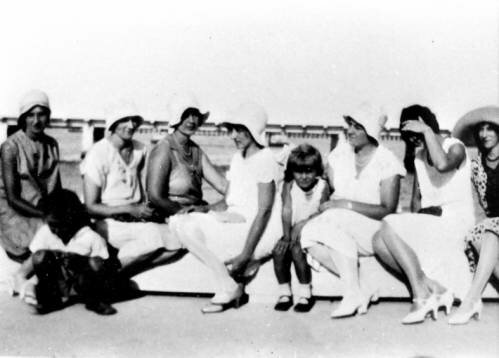
| Ladies in their summer beach costumes at the home of J.R. Wood. Photo courtesy of Manatee County Public Library System circa 1920. |
Dressing for the Weather
While old photographs may make it look like people were overdressed for Florida's climate, appearances can be deceiving.
Lightweight cotton and linen fabrics were common because they allowed air to circulate and helped keep moisture away from the body. Men often wore loose shirts and wide-brimmed hats, while women favored lightweight dresses made from breathable materials.
Natural fabrics were essential long before modern moisture-wicking clothing became available.
|
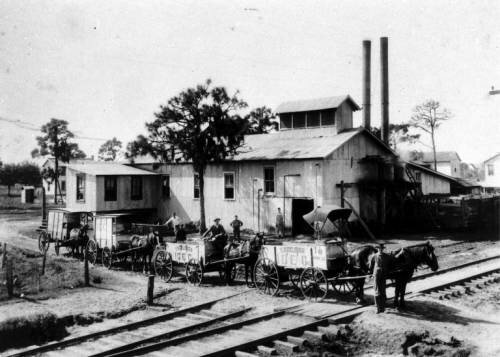
Horse drawn ice delivery wagons in front of the Excelsior Ice Company at 115 Beach Street. H.W. Lind was manager. Photo courtesy of Manatee County Public Library System circa 1905. |
A Cool Drink Was a Luxury
It’s hard to imagine not having access to ice water, but beverages were not dispensed by the refrigerator door.
Many families stored drinking water in earthenware crocks where evaporation helped keep it cool. Lemonade, sweet tea and citrus drinks offered refreshing relief after a long day outdoors.
If a family had access to ice, that was even better.
Before local ice plants existed, blocks of ice were harvested from frozen lakes in the North and shipped south by rail and steamship. Because much of it melted during transit, ice was expensive and often considered a luxury. According to Sarasota County Historian Ann Shank, only a small number of early settlers could afford imported ice.
As Southwest Florida grew, local ice plants began appearing. In Bradentown, the arrival of the railroad in 1902 made ice distribution much easier, while agricultural and fishing industries depended on ice to preserve their products for shipment.
One of the area's oldest surviving ice businesses, Manatee Ice Company, traces its roots to 1902 and still operates from a historic Bradenton location today.
The Original Florida Air Conditioning
Of course, nothing worked better than a breeze.
People gathered on porches in the evening, visited the riverfront, opened every window in the house and sought out shade beneath sprawling live oaks. In communities like Manatee, Palmetto and Sarasota, proximity to the water wasn't just scenic—it was practical. Afternoon breezes off the Manatee River, Sarasota Bay and the Gulf provided natural relief long before air conditioners became household fixtures.
Hotels promoted their shaded verandas and waterfront locations as selling points, while residents instinctively knew where to find the coolest spots in town.
In many ways, Florida's earliest residents understood something we occasionally forget today: sometimes the best solution isn't to escape the environment but to adapt to it.
The next time you step from your air-conditioned car into a Florida parking lot in July, spare a thought for the generations who came before us. They survived summer with sleeping porches, iced lemonade, lightweight clothing and a healthy respect for the afternoon sun.
And somehow, they managed just fine.


Comments
No comments on this item
Only paid subscribers can comment
Please log in to comment by clicking here.