

If you've crossed the Sunshine Skyway enough times, you probably remember that sudden panic when you realized you didn't have enough cash for the toll. I made more than one impromptu gas station stop over the years, but there were also nicer moments: exchanging a quick hello with the toll collector or pulling up to discover that the stranger in front of you had already paid for you.
On April 12, those little rituals disappeared when the Skyway switched to all-electronic tolling. It's faster and certainly more convenient, but it also got me thinking about the people who once performed jobs Floridians took for granted and all the different reasons those jobs eventually disappeared.
With Labor Day arriving tomorrow, it seemed like a good time to remember a few of them.
The Telephone Operator
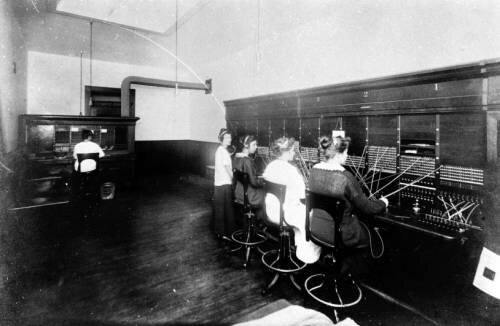
Long before we carried phones in our pockets, placing a call could require the help of another person. Telephone operators sat in front of enormous switchboards, connecting callers by plugging cords into the appropriate jacks. The Manatee County Library System's Eaton collection contains photographs of operators at work in Bradenton, circa 1924.
Telephone operating provided generations of women with employement, but automatic switching and direct dialing gradually removed the need for a person to physically connect each call. The telephone certainly didn't disappear — quite the opposite — but one of the people who made it work did. Today, the idea of telling an operator whom you'd like to call seems almost as foreign as having to explain to a teenager what a busy signal was.
The Ice Man
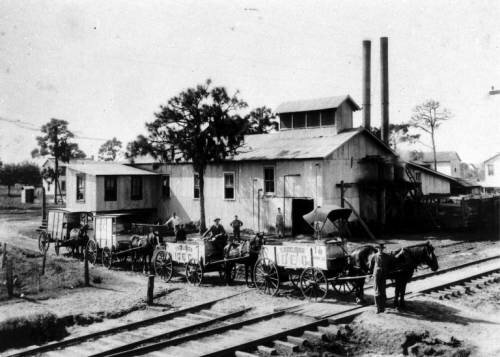
At the turn of the 20th century, horse-drawn ice delivery wagons lined up outside the Excelsior Ice Company at 115 Beach Street, where H.W. Lind served as manager. The company appears as “Exselsior” in the city directory, either an alternate spelling or a typo that managed to survive more than a century in the historical record.
The men driving those wagons performed a service households depended on. Before electric refrigerators became commonplace, blocks of ice kept food cold inside insulated iceboxes, which meant fresh ice had to be delivered regularly. It was physical work, hauling heavy blocks from wagon to house, but advances in home refrigeration eventually made the neighborhood ice route unnecessary. Unlike some of the jobs on this list, there wasn't much controversy surrounding its disappearance. Technology simply gave people an easier way to accomplish at home what they once paid someone else to do.
The Midwife
Long before giving birth meant checking into a hospital, many Florida women relied on midwives, particularly in rural and Black communities where physicians could be difficult to reach. Midwifery was a profession built largely on experience, apprenticeship and knowledge passed from one woman to another, and many midwives became deeply respected members of the communities they served.
That began to change as medicine became more professionalized and physicians pushed for greater oversight of childbirth. Florida began supervising midwives in 1915 and made licensing mandatory in 1931, requiring applicants to meet new standards that included reading a state manual and attending at least 15 births under a licensed physician. The regulations were intended to improve maternal and infant health, but the State Archives notes that increased scrutiny also pushed many midwives out of the profession. The need for someone to deliver babies hadn't disappeared; what changed was society's definition of who was qualified to do it.
The Turpentine Worker
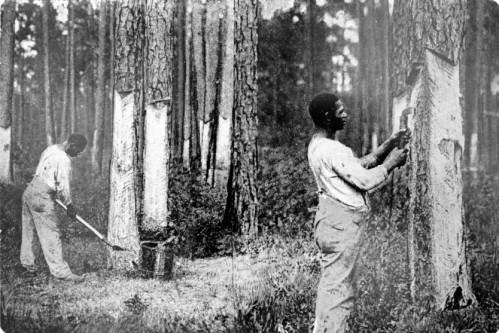
For generations, Florida's vast pine forests supported a thriving turpentine industry. Workers cut into pine trees to collect resin that could be distilled into turpentine and rosin, products used in everything from paints and varnishes to soap. It was hot, difficult work, and much of it was performed by Black laborers under conditions that are difficult to separate from the racial history of the Jim Crow South.
Turpentine camps were often isolated and notorious for harsh working conditions and abuse. In 1939, writer and anthropologist Zora Neale Hurston traveled to a camp in Cross City for the Federal Writers' Project, leaving behind a rare firsthand account of the predominantly Black workers she met there. Florida's turpentine industry eventually declined as synthetic alternatives and other economic changes transformed the market. In this case, a disappearing occupation also left behind a complicated history of the people whose difficult labor helped build an industry while receiving little of its prosperity.
The Cortez Net Fisherman
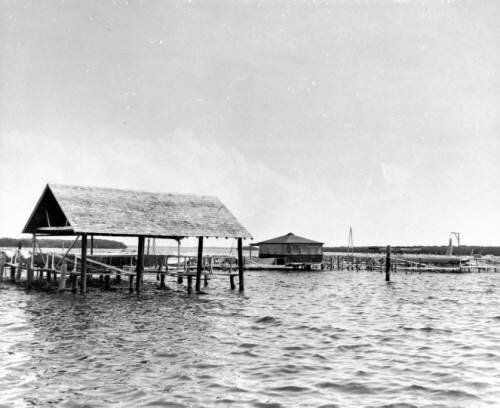
For generations, commercial fishing wasn't simply an occupation in Cortez; it was a way of life passed down through families. The village relied heavily on inshore net fishing for mullet and other fish until Florida voters approved a constitutional amendment in 1994 restricting traditional net gear. NOAA later reported that Cortez had three operating fish houses before the ban and that two closed shortly after it took effect.
The fishermen who remained had to adapt. A.P. Bell Fish Company survived in part because it had expanded into offshore fisheries, and according to Karen Bell's 2014 oral history for NOAA's Cortez Village Voices from the Fisheries project, the family continued looking for ways to diversify after the net ban affected sales. Bell also purchased Star Fish Company, helping build the dockside seafood business and restaurant that is now part of the Cortez experience. The story is a reminder that sometimes jobs disappear not because the work becomes obsolete, but because communities make difficult choices about how natural resources should be protected and used.
Looking back at these occupations, it's tempting to assume that jobs disappear because we simply don't need them anymore, but their histories tell a more complicated story. New technology made ice delivery unnecessary and automation transformed telephone service, while regulation changed who could practice midwifery and how commercial fishermen could work. Other occupations disappeared alongside industries whose labor practices we wouldn't necessarily want to resurrect.
Sometimes something small disappears along with the job, too. That's what I keep thinking about when I remember the Skyway tollbooth. I don't particularly miss searching my purse for cash, but I do miss the possibility of discovering that someone I'll never meet decided to pay an extra $1.75 just to make a stranger's day a little better.
And there is another way jobs can disappear, one that feels particularly relevant in Florida this year.
In November, voters will consider Amendment 3, which would significantly increase Florida's homestead exemption for non-school property taxes and place new restrictions on how counties and municipalities can use property-tax revenue. The debate over whether those changes represent needed tax relief or place too great a strain on local government is one voters will have to decide for themselves.
What shouldn't get lost in that debate are the people behind those budgets. Librarians, park employees, lifeguards, maintenance crews and countless other public workers perform jobs that are easy to take for granted precisely because someone is usually there to do them. Whether and how individual positions would be affected will depend on decisions made by local governments, but reduced or restricted revenue inevitably raises questions about what services communities are willing and able to continue providing.
This Labor Day, perhaps it's worth remembering that the jobs that disappear aren't always jobs we stopped needing.
Sometimes they're jobs we stopped funding.


1 comment on this item
Only paid subscribers can comment
Please log in to comment by clicking here.
serenowens
The net ban was to protect the mullet population from being wiped out. The first mullet fishermen need only bang on the sides of their boats to have the mullet leap in! Another example of destroying a resource with no thought for future generations!
Tuesday, September 8 Report this